

Rustic Console Table Guide: How to Choose the Best One
A rustic console table is one of the simplest ways to add warmth, storage, and character to an entryway, hallway, or living room. Whether you are furnishing a new home or refreshing a tired foyer, the right table does more than fill empty wall space — it sets the tone for the whole room. This guide walks through what makes a console table "rustic," how to pick the right size and wood, and where to place it for the best effect.
Quick answer: A rustic console table is a narrow, elevated table made from solid or reclaimed wood, usually placed against a wall in an entryway or behind a sofa. Its defining feature is natural wood character — visible knots, grain, and texture — rather than a flawless factory finish.
What Is a Rustic Console Table?
In short, a rustic console table is a long, narrow table designed for display and light storage, built from wood that retains visible natural marks instead of a smooth, uniform surface. Unlike mass-produced veneer furniture, these pieces are often made from solid pine, mango, teak, or reclaimed lumber salvaged from older structures.
Because the wood is solid rather than laminated, each rustic console table tends to carry unique grain patterns, color variation, and the occasional knot or nail hole from its previous life. Those details are generally treated as character marks rather than defects, which is part of why reclaimed wood pieces feel so personal compared to standard retail furniture. For instance, the Timbergirl Old Reclaimed Wood Console Table showcases this kind of weathered, one-of-a-kind grain in a compact entryway size.
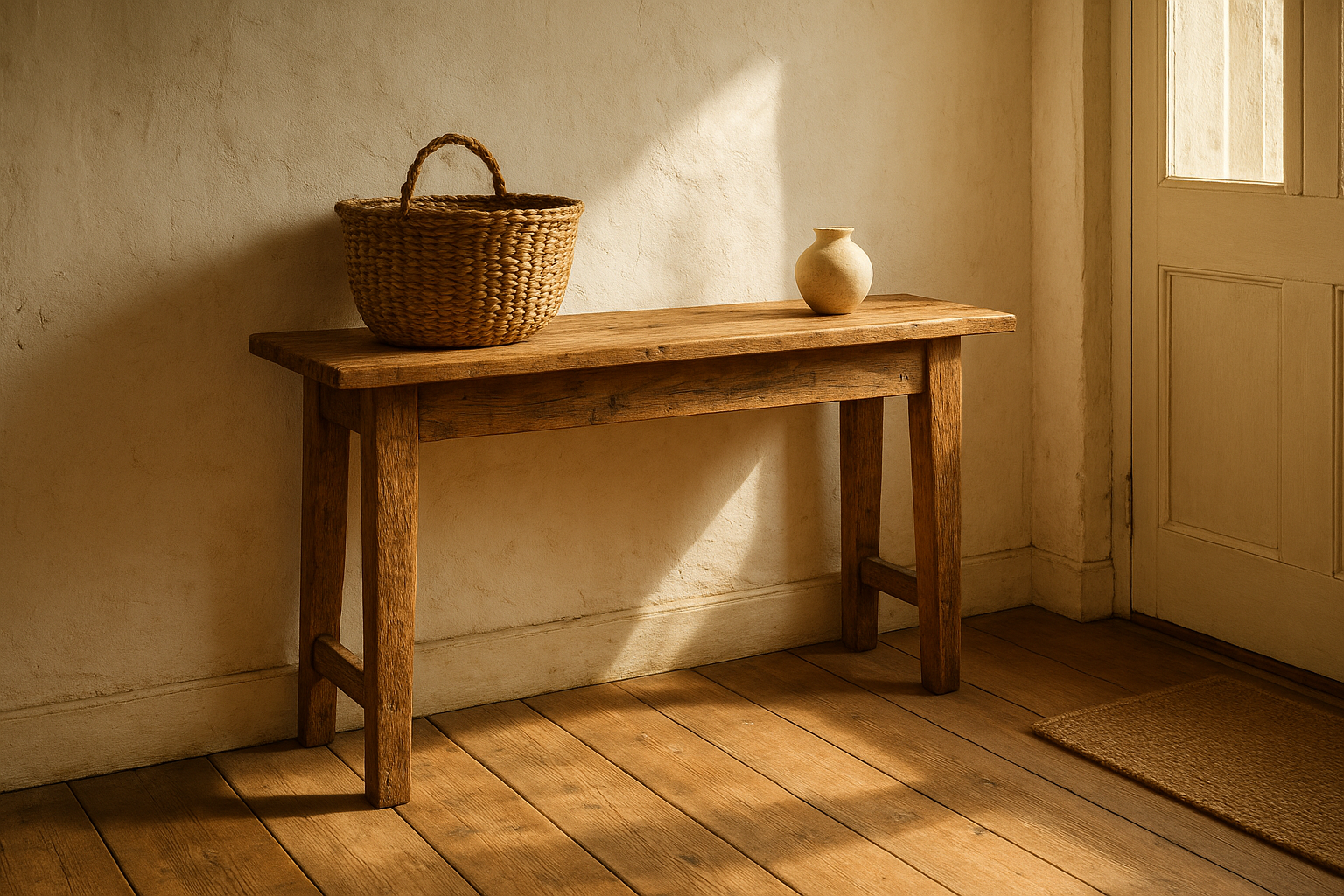
A rustic console table brings warmth and natural texture to a plain entryway wall.
Why Choose Solid or Reclaimed Wood for a Console Table
Solid and reclaimed wood console tables are generally built to last far longer than particleboard or veneer alternatives. Because the entire piece is constructed from real timber rather than a thin wood-look layer over composite material, it can typically be repaired, refinished, or lightly sanded instead of replaced when it shows wear.
According to the U.S. Forest Service, hardwoods like oak and teak can retain structural integrity for 50 years or more when properly maintained, which helps explain why solid wood furniture is often passed down through generations rather than discarded. In contrast, particleboard furniture frequently has a much shorter functional lifespan.
Reclaimed wood specifically repurposes lumber from old barns, factories, or shipping materials, which reduces new timber demand. As a result, a reclaimed wood console table often carries both an environmental story and a visual one, with saw marks, weathering, and old finish layers still visible on the surface.
How Grain and Knots Affect Character
Every solid wood console table will show some natural variation, and no two boards are identical. Rather than viewing a knot or color shift as a flaw, most rustic furniture buyers consider it proof the piece is genuinely made from real wood rather than a printed laminate.
Popular Styles of Rustic Entryway Tables
Rustic entryway tables come in several distinct looks, so it helps to know the main categories before shopping. Farmhouse-style tables usually feature straight lines, painted or whitewashed finishes, and simple hardware. Southwestern styles often include carved detailing, warmer wood tones, and sometimes metal accents.
Reclaimed wood designs, meanwhile, lean into visible saw marks, mixed plank widths, and weathered surfaces for a more lived-in feel. Artisan-carved pieces, frequently handcrafted by independent suppliers in regions such as Mexico or Indonesia, add intricate detailing and hand-applied finishes that mass production simply cannot replicate.
If you are still exploring options, browsing a full rustic entryway collection side by side can make it easier to compare wood tones, leg styles, and storage configurations before deciding.
How to Choose the Right Rustic Console Table
Choosing the right table does not need to be complicated. Below is a simple, step-by-step process that covers the factors that matter most.
- Measure your space. Measure width, depth, and height before shopping, and leave at least 36 inches of walkway clearance so the table does not block foot traffic.
- Decide on wood and finish. Choose between pine, mango, teak, or reclaimed wood based on the color tone and grain pattern that best complements your existing floors and furniture.
- Consider storage needs. Decide whether drawers, open shelving, or a simple flat surface suits your daily habits, since storage features affect both depth and price.
- Match the style to your room. Look for farmhouse, Southwestern, or carved reclaimed details that echo other rustic elements already present nearby.
- Confirm freight delivery details before buying. Check that freight pricing is shown upfront before checkout, since large solid wood pieces usually ship by pallet freight rather than standard parcel.
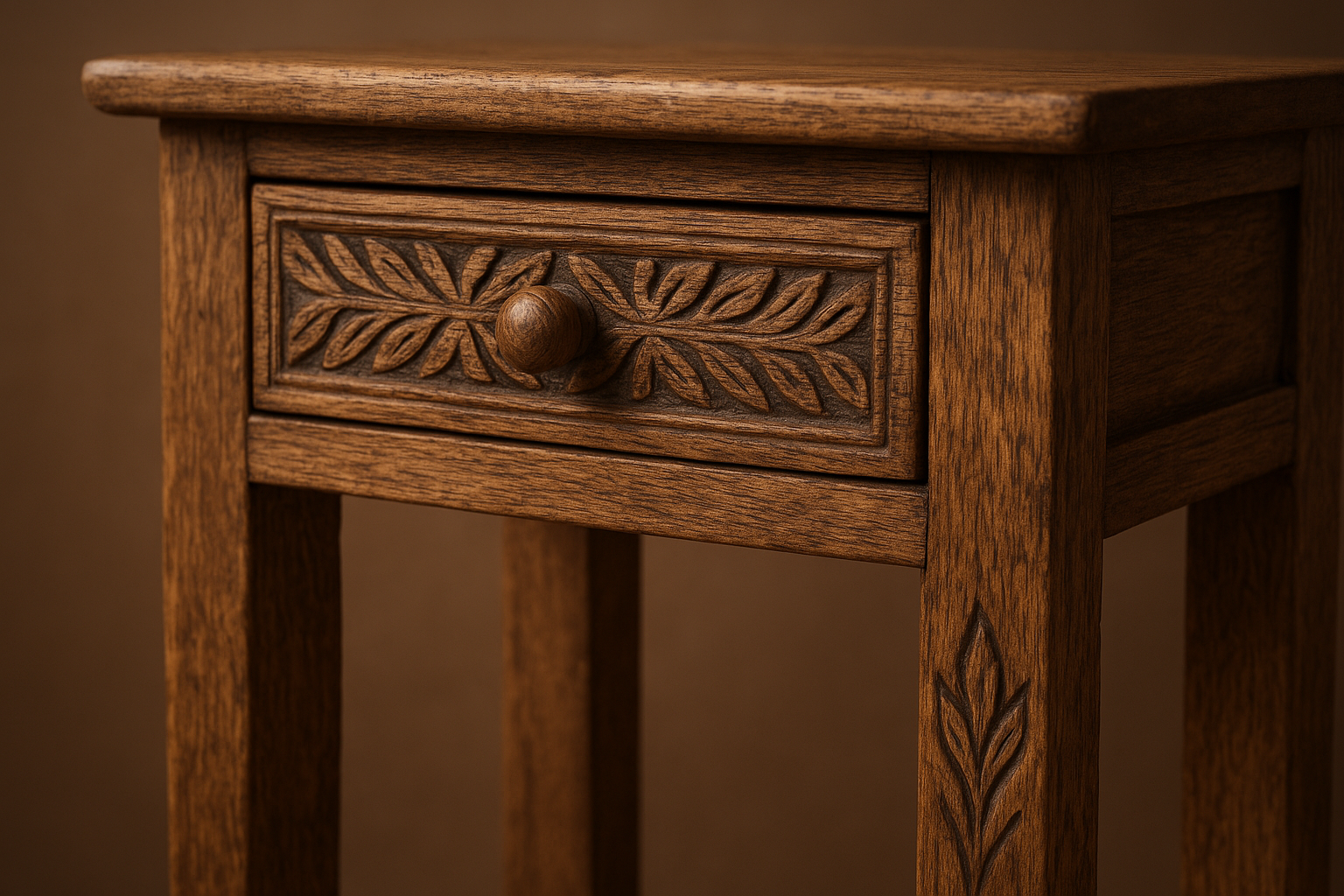
Carved details and natural grain are hallmarks of handcrafted rustic furniture.
Where to Place a Rustic Console Table in Your Home
The entryway is the most traditional spot, but it is far from the only option. A console table also works well in a hallway, behind a sofa that floats in the middle of a room, or along an empty dining room wall as an extra serving surface.
In the living room, a console table can pair naturally with other solid wood pieces, such as a rustic solid wood coffee table, to create a cohesive material story across the space. Similarly, placing a reclaimed wood console beneath a wall-mounted television can sometimes replace the need for a separate media stand in smaller rooms, though a dedicated piece like a reclaimed wood TV cabinet with drawers offers more storage if media equipment is involved.
For a broader look at how these pieces work together, the rustic living room furniture collection shows several coordinated wood tones and styles in context.
Behind-the-Sofa Placement Tips
When using a console table behind a sofa, aim for a table that sits level with or slightly below the sofa's back height. Otherwise, the table can look oddly tall, and items placed on top may feel disconnected from the seating area below.
Caring for Your Solid Wood Console Table
Routine care is straightforward. Dust the surface with a soft, dry cloth, and wipe up spills promptly so moisture does not sit on the finish. Because solid wood naturally expands and contracts with humidity, it is best to avoid placing the table directly next to heating vents, fireplaces, or windows with intense direct sunlight.
Occasionally, a light coat of furniture wax or wood conditioner can help maintain the finish, particularly on reclaimed pieces with an oiled rather than lacquered surface. Resources such as Wikipedia's overview of wood finishing explain how different finish types respond to cleaning products, which is worth a quick read before using anything beyond a damp cloth.
Buying a Rustic Console Table Online: What to Expect
Buying substantial furniture online can feel uncertain, especially for a piece built entirely from solid wood. Because of its weight, most rustic console tables large enough for an entryway ship via pallet freight rather than a standard parcel carrier, and the delivery is typically curbside rather than brought inside.
Before checkout, look for a retailer that shows upfront freight pricing so there are no surprise charges at delivery. A site like cozycompletehomes.com displays freight costs clearly during checkout and backs purchases with a quality guarantee, which adds some reassurance when ordering a large piece sight unseen.
Many solid wood console tables are also made to order, with production and freight timelines commonly running 4 to 8 weeks. Consequently, it helps to plan ahead if you need the table by a specific date, such as before a holiday gathering or move-in day. Items shipped directly from independent artisan supplier partners may follow their own separate timeline, so checking estimated delivery dates before ordering is a reasonable step.
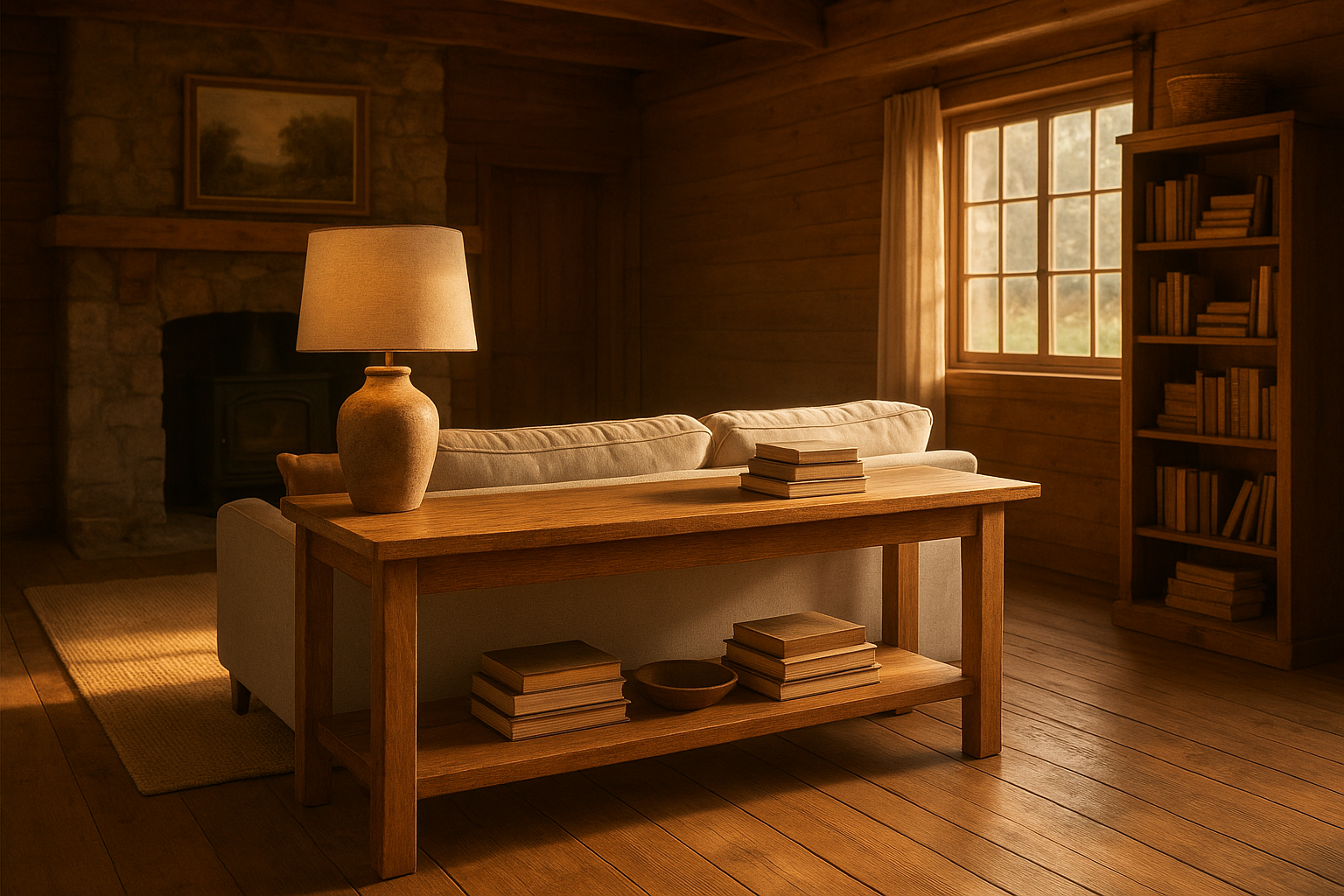
A solid wood console table adds both storage and style when placed behind a sofa.
Frequently Asked Questions
What is a rustic console table?
A rustic console table is a narrow, elevated table made from solid or reclaimed wood, typically placed against a wall in an entryway, hallway, or behind a sofa. It usually shows natural grain, knots, and visible texture rather than a smooth, uniform finish.
How tall should a rustic console table be?
Most console tables stand between 30 and 36 inches tall, matching standard counter height. However, a sofa-back console should sit slightly lower than or level with the back of the sofa so the display surface feels balanced.
What wood is best for a rustic console table?
Pine, mango, and reclaimed wood are popular choices because they are durable and show rich natural grain. Teak is another strong option valued for its density and resistance to wear over time.
How much does a rustic console table cost?
Prices vary widely depending on size, wood type, and craftsmanship, but hand-curated solid wood console tables commonly range from a few hundred dollars to over a thousand. Reclaimed and artisan-carved pieces tend to sit at the higher end because of the labor involved.
How long does it take to receive a rustic console table?
Many solid wood console tables are made to order, with a 4 to 8 week production and freight timeline. Pieces already in stock from artisan supplier partners may ship sooner, though timelines still vary by product.
Can a rustic console table be used behind a sofa?
Yes, a rustic console table works well behind a sofa that is not pushed against a wall, creating a natural display surface for lamps or decor. For the best proportion, choose a table that is a few inches shorter than or equal to the sofa back.
What's the difference between a console table and a sofa table?
A sofa table is simply a console table used specifically behind a sofa, so the terms often overlap. The main distinction is placement: console tables can go in entryways or hallways, while sofa tables are sized to match the back of a specific couch.
How do I care for a solid wood console table?
Dust regularly with a soft, dry cloth and wipe up spills quickly to protect the finish. Avoid placing the table in direct sunlight or near heating vents, since temperature swings can cause solid wood to expand and contract.
What mistakes should I avoid when choosing a rustic console table?
A common mistake is buying a table that is too wide or too deep for the hallway or entry, which can block foot traffic. Another is overlooking freight delivery requirements, since large solid wood pieces typically arrive via curbside pallet freight rather than standard parcel.
Can a rustic console table work in a modern home?
Yes, a rustic console table can anchor a modern space when paired with clean-lined decor and neutral walls, creating a warm contrast against sleeker furnishings. This blended look, sometimes called modern rustic or transitional style, is increasingly popular in entryways.
How is a rustic console table delivered?
Large solid wood console tables are generally delivered via pallet freight to the curb outside your home, while smaller decor pieces ship by standard parcel carrier. Freight pricing should be shown upfront before checkout so there are no delivery surprises.
Are knots and grain variations a flaw in a rustic console table?
No, natural knots, grain shifts, and small color variations are expected characteristics of solid and reclaimed wood, not defects. These marks are part of what gives each rustic console table its individual character and history.
What's the best way to style a rustic console table?
Layer a few varied-height items, such as a lamp, a tray, and a small plant, to create visual interest without clutter. Keeping groupings asymmetrical and leaving some open surface space usually looks more natural than a perfectly centered arrangement.
Final Thoughts
In the end, a rustic console table is a small investment that delivers an outsized visual impact, whether it anchors an entryway or adds storage behind a sofa. By measuring your space, choosing a wood type you love, and confirming freight details before checkout, you can select a piece that fits both your room and your routine. Above all, remember that the knots, grain shifts, and weathered marks on a solid or reclaimed wood console table are not imperfections to avoid — they are the character that makes the piece worth keeping for years to come.