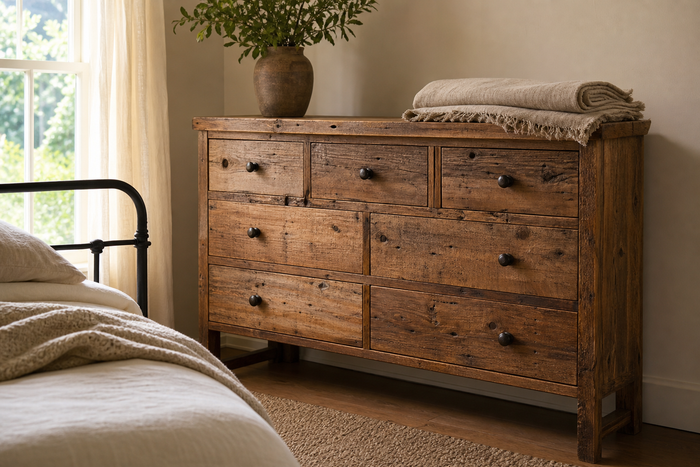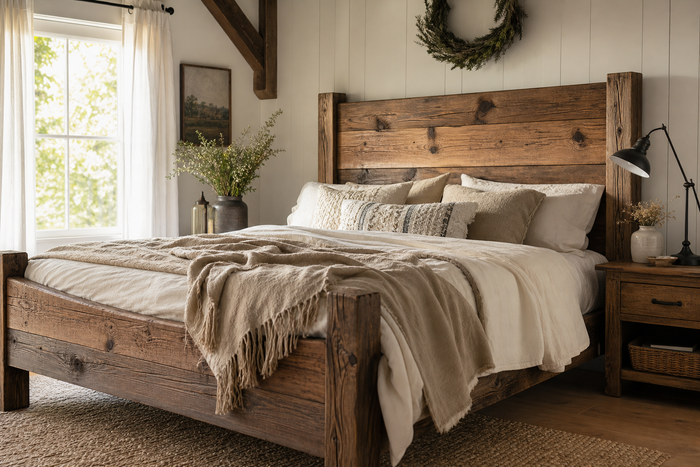
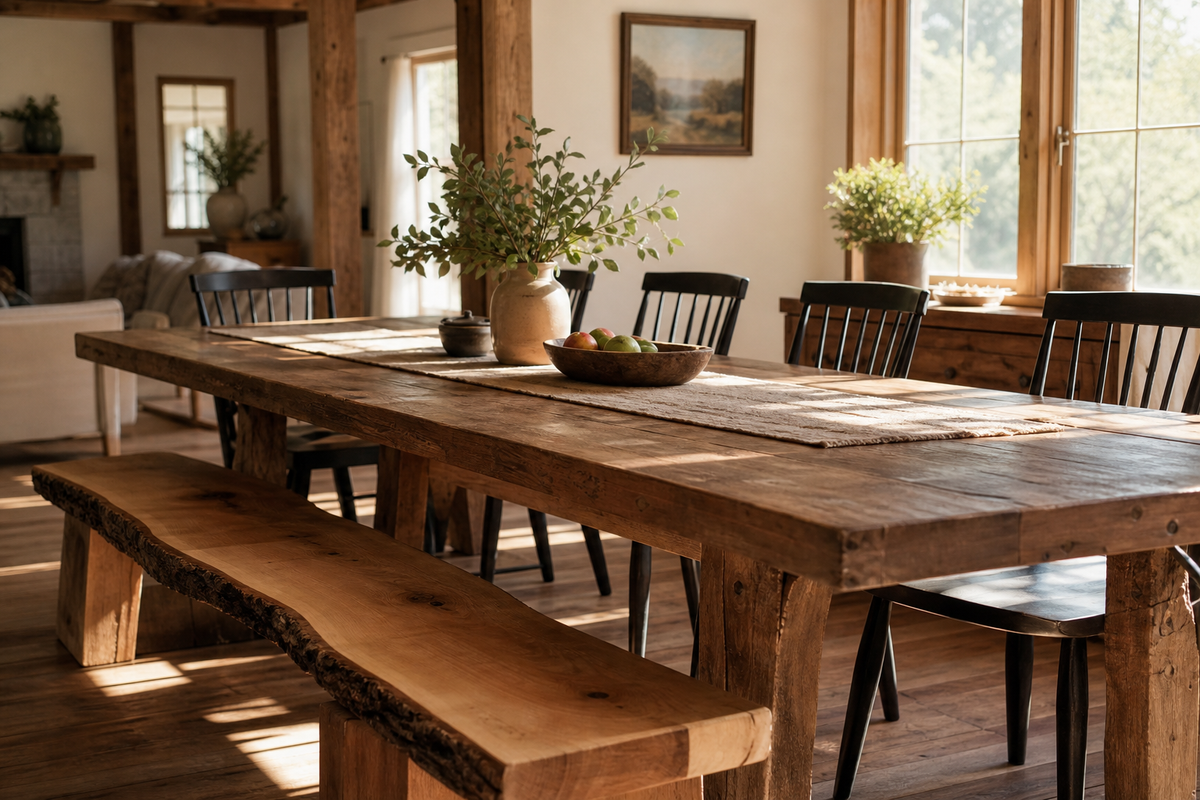
A live edge dining bench brings the raw, natural shape of a tree's outer edge into everyday dining spaces, creating a seat that feels handcrafted rather than mass-produced. Unlike a standard bench with perfectly straight sides, a live edge piece keeps the organic curves, knots, and bark-lined contours exactly where the wood grew them. For homeowners who want furniture with personality and durability, this style pairs rustic charm with the practicality of solid wood construction built to last for generations.
Quick answer: A live edge dining bench is a solid wood seating piece that preserves the natural, uncut outer edge of a tree slab along one or both long sides instead of being trimmed into a straight rectangle. It is typically paired with a dining table to add rustic texture, flexible seating, and a one-of-a-kind grain pattern.
What Is a Live Edge Dining Bench?
In short, a live edge dining bench is a bench milled from a solid slab of wood where at least one long edge still shows the tree's original, irregular contour, bark line, or natural curve. Specifically, the top surface is sanded flat and smooth for seating, while the outer edge is left untouched by a straight saw cut.
This style grew out of a broader woodworking movement that celebrates visible grain, knots, and mineral streaks as design features rather than flaws. As a result, no two live edge benches look exactly alike, even when cut from the same tree. According to the Wikipedia entry on live edge furniture, this approach has roots in mid-century studio woodworking and has since become popular across farmhouse, modern rustic, and Southwestern interior styles. In contrast to veneered or engineered seating, a solid live edge bench is typically cut from a single thick slab of hardwood, which adds both weight and long-term durability.
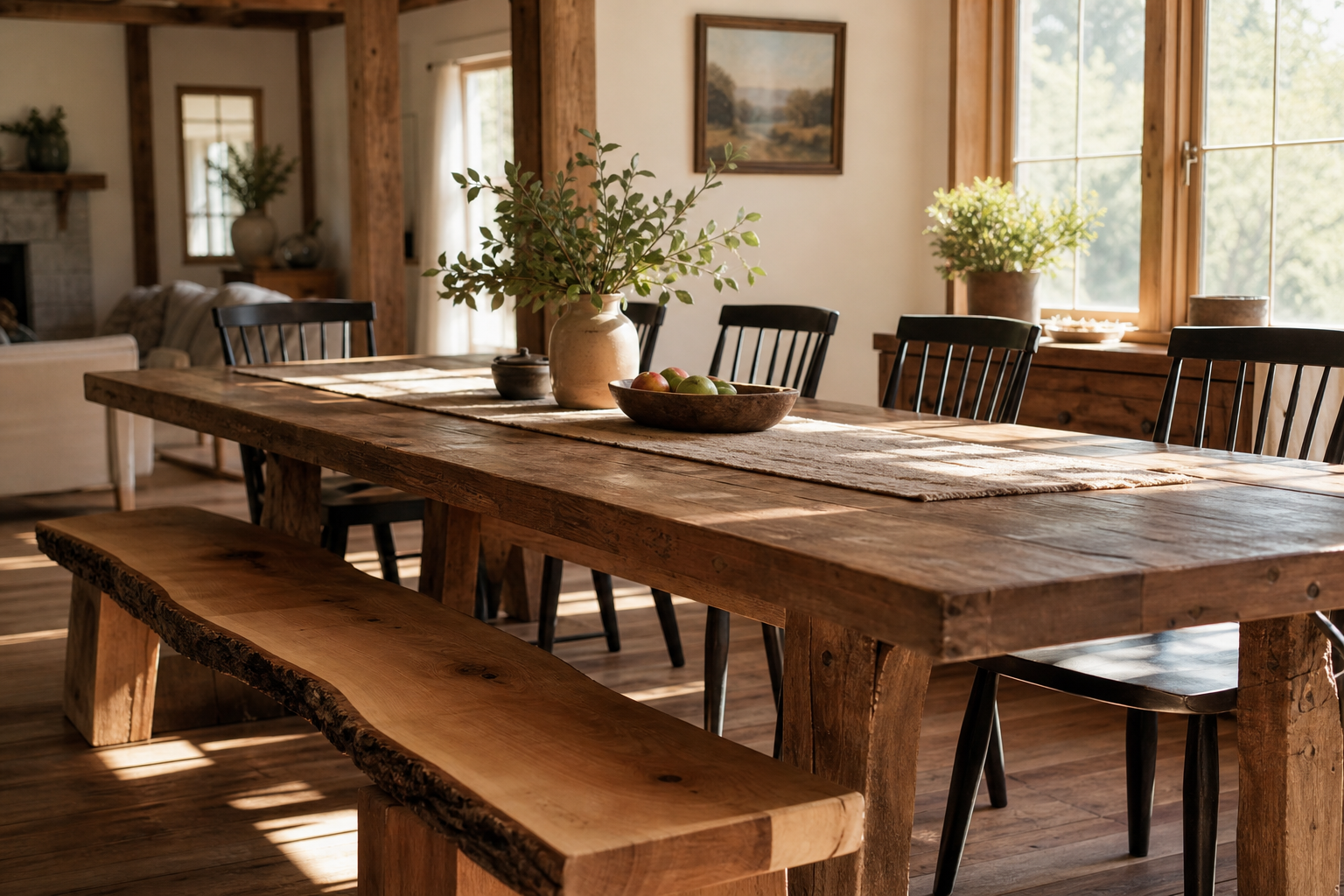
A live edge dining bench adds natural texture and warmth to a farmhouse-style dining room.
Why Choose a Solid Wood Live Edge Bench for Your Dining Room
Homeowners often choose a solid wood live edge bench because it offers flexible seating that standard chairs cannot match. For example, a bench can seat two people comfortably or three in a pinch, which makes squeezing in extra guests during holidays much easier.
In addition, solid wood construction tends to outlast many upholstered or engineered-wood alternatives. Because the bench is built from thick, dense lumber rather than particleboard, it resists wobbling and holds up to daily use for years. Furthermore, natural wood ages gracefully; small dents, color shifts, and surface marks often add to the character instead of detracting from it. Many shoppers also appreciate that a reclaimed wood dining bench gives previously used lumber, such as old barn wood or salvaged doors, a meaningful second life rather than sending it to a landfill.
How to Choose the Right Live Edge Dining Bench
Choosing the right live edge dining bench involves more than picking an attractive slab. Specifically, the following steps help ensure the bench fits your table, your space, and your household's daily needs.
- Measure your table and space. Measure the length and width of your dining table along with the clearance around it, then choose a bench roughly 10 to 12 inches shorter than the tabletop so it tucks in cleanly.
- Decide on wood type and finish. Compare wood species such as pine, mango, teak, or reclaimed lumber, considering color tone, hardness, and how each finish will complement your existing dining furniture over time.
- Match seat height and style. Confirm the bench seat height lines up with your current dining chairs, typically between 17 and 19 inches, so seating heights look and feel consistent around the table.
- Consider freight delivery logistics. Review whether the bench ships by pallet freight or standard parcel carrier, confirm your address can accept curbside freight delivery, and plan for someone to help move the piece inside.
- Check guarantee and return policy. Before purchasing, read the seller's quality guarantee and return promise so you understand your options if the bench arrives damaged or does not fit your space as expected.
If you want a ready example, the 75-inch brown solid wood live edge dining bench illustrates several of these points at once, with a generous length suited to longer farmhouse tables and a naturally finished edge.
Live Edge Bench Styles and Wood Types
Live edge benches come in a wide range of styles, from simple farmhouse slabs to heavily carved artisan pieces. For instance, some benches feature hand-carved detailing reminiscent of reclaimed architectural elements, such as the Lower 40 old door bench with hand carving, which repurposes salvaged wood into a one-of-a-kind seating piece.
Wood species also shape the final look. Pine offers a lighter, casual tone with visible knots, while mango and teak bring richer color variation and added density. According to data referenced by the Wood Database, hardness and grain pattern vary significantly between species, which directly affects how a bench wears over decades of use. Similarly, the USDA Forest Service notes that wood density and moisture content both influence long-term furniture durability, which is worth considering before choosing a species for heavy daily use.
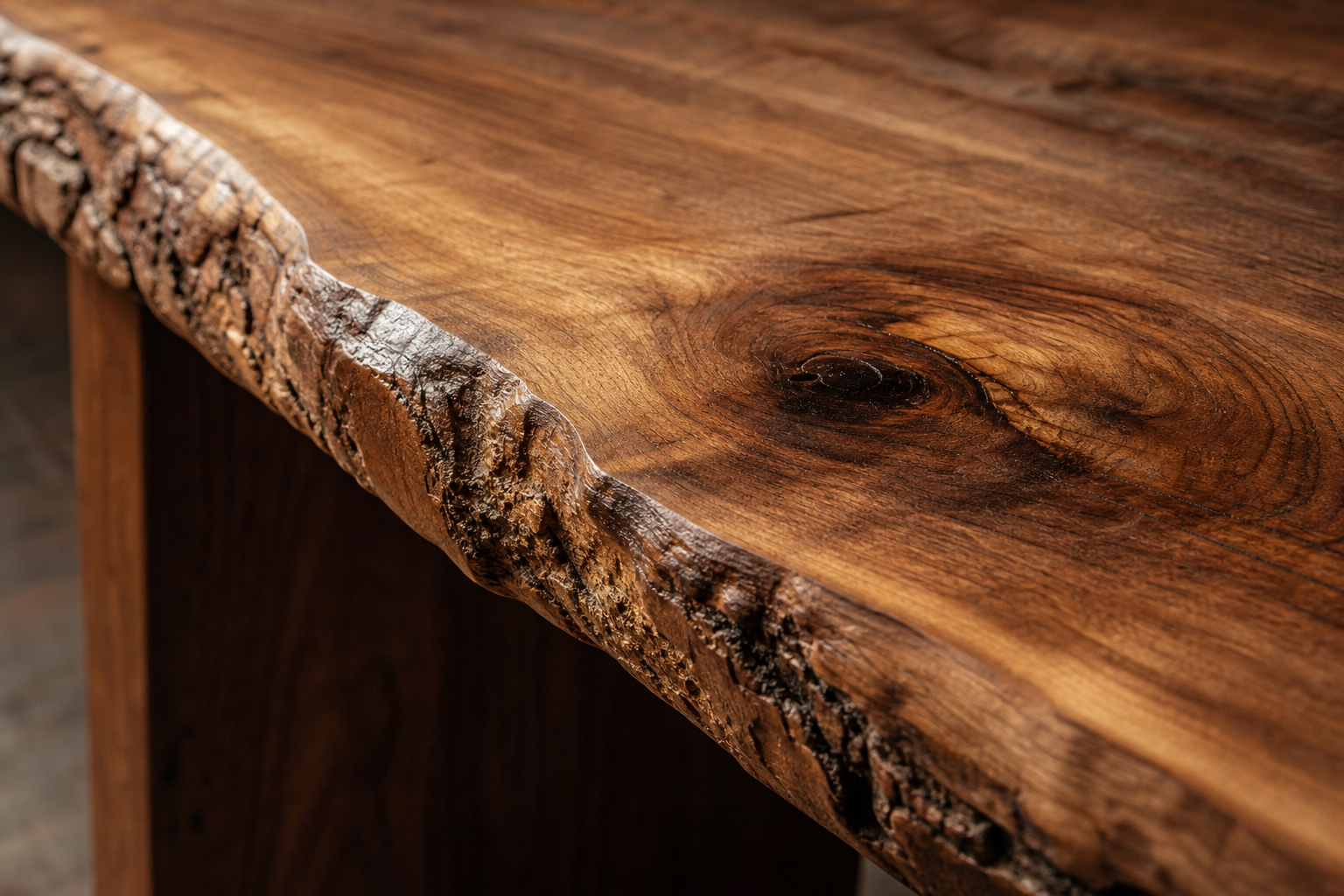
Natural knots and grain variation are treated as character, not flaws, on quality live edge pieces.
Sizing and Pairing Your Reclaimed Wood Dining Bench
Pairing a reclaimed wood dining bench with the right table takes a little planning. Above all, the bench and table should share a similar wood tone or finish family so the set reads as intentional rather than mismatched.
A solid reclaimed table, such as a reclaimed wood dining table, pairs naturally with a bench of similar grain character. Alternatively, a more refined option like the walnut dining table with leaf works well with a simpler, less heavily carved bench so the two pieces balance each other instead of competing for attention. Typically, one bench placed along the longer side of the table, with chairs on the opposite side, creates the most comfortable arrangement for everyday meals and gatherings.
Caring for Your Live Edge Dining Bench
Caring for a live edge dining bench is straightforward once you understand a few basics. First, wipe spills promptly with a soft, slightly damp cloth, then dry the surface right away to prevent moisture from soaking into the grain.
Consequently, avoiding direct sunlight and placing the bench away from heating vents helps prevent uneven fading or cracking over time. In addition, reapplying a food-safe wood conditioner or oil every six to twelve months keeps the surface nourished and reduces the chance of splitting along the natural edge. Therefore, a little routine maintenance goes a long way toward preserving both the appearance and structural integrity of a solid wood piece built to last for generations.
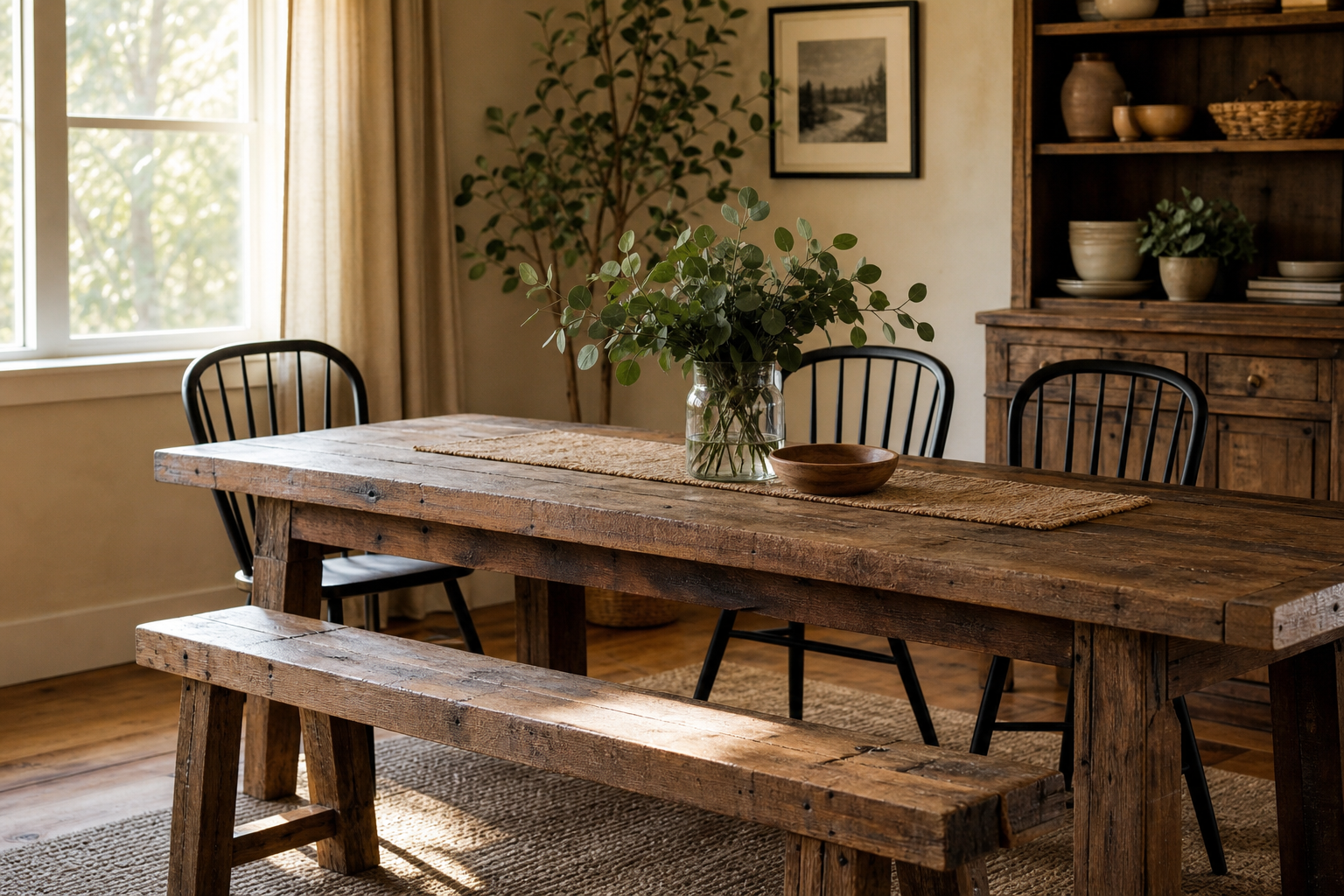
A well-paired table and bench set gives a dining room a warm, finished feel.
Where to Buy a Live Edge Dining Bench
When shopping for a live edge dining bench online, look for sellers who show upfront freight pricing before checkout, since large solid wood pieces are usually too heavy for standard parcel shipping. In particular, confirm whether the piece ships via curbside pallet freight, because inside delivery is often not included unless specifically stated.
At cozycompletehomes.com, every piece is individually researched and hand-curated rather than mass-sourced, with many benches and tables built to order through independent artisan partners over a 4 to 8 week production and freight timeline. For shoppers who also want storage along with seating, the bamboo carved storage bench offers a practical alternative for entryways or smaller dining nooks. You can browse the full collection directly at cozycompletehomes.com to compare current styles and sizes before deciding.
Frequently Asked Questions About Live Edge Dining Benches
What is a live edge dining bench?
A live edge dining bench is a solid wood bench that keeps the tree slab's natural, uncut outer edge along one or both sides instead of a straight-cut edge. It is usually paired with a dining table for seating with rustic, organic character.
How long does a live edge dining bench typically last?
A solid wood live edge bench can last for decades, and often generations, when it is made from dense hardwood and cared for properly. Reclaimed wood pieces are frequently even more durable because the lumber has already aged and stabilized.
Why do live edge benches cost more than standard benches?
Live edge benches cost more because each slab is individually selected, cut, and finished to preserve its natural shape rather than mass-milled into identical straight pieces. Hand-finishing the bark edge and sanding irregular contours also takes more labor.
How do I choose the right size live edge dining bench?
Measure your dining table's length and subtract about 12 inches so the bench tucks in neatly without overhanging the table ends. Also confirm seat height, usually 17 to 19 inches, matches your existing dining chairs.
What wood types are commonly used for live edge benches?
Common choices include pine, mango, teak, acacia, and reclaimed wood from old structures like barns or doors. Each species offers a different grain pattern, color tone, and natural durability.
Is a live edge dining bench comfortable for everyday use?
Yes, most live edge benches have a flat, smoothly sanded seating surface even though the outer edges stay irregular. Adding a cushion or bench pad can increase comfort for longer meals.
What is the difference between a live edge bench and a standard wood bench?
A standard wood bench has straight, uniform edges cut for a clean rectangular shape, while a live edge bench preserves the tree's natural curved outline. The live edge version typically has more visible grain variation and a one-of-a-kind silhouette.
How should I clean and maintain a live edge dining bench?
Wipe the bench regularly with a soft, slightly damp cloth and dry it immediately to prevent moisture absorption into the grain. Avoid harsh chemical cleaners, and reapply a food-safe wood conditioner or oil every six to twelve months.
Can a live edge dining bench be used without a matching table?
Yes, a live edge bench works well as standalone entryway seating, extra storage-adjacent seating, or an accent piece in a living space. Many homeowners also use it for additional seating at kitchen islands.
What are common mistakes when buying a live edge dining bench online?
A common mistake is not checking exact dimensions against the dining table, which can leave the bench too long, too short, or mismatched in seat height. Another mistake is overlooking freight delivery details for large, heavy solid wood pieces.
Does natural wood grain variation mean a bench is defective?
No, knots, mineral streaks, and grain shifts are normal characteristics of solid and reclaimed wood, not defects. These features are part of what makes each live edge dining bench visually unique.
How is a large live edge dining bench delivered to my home?
Large solid wood benches are usually shipped by pallet freight carrier and delivered curbside to the contiguous United States. Smaller accent benches may ship by standard parcel carrier instead, depending on size and weight.
What is the best way to pair a live edge dining bench with chairs?
Place the bench on one long side of the table and pair it with two or four chairs on the opposite side and ends for balance. This combination adds flexible seating while keeping a cohesive, intentional look.
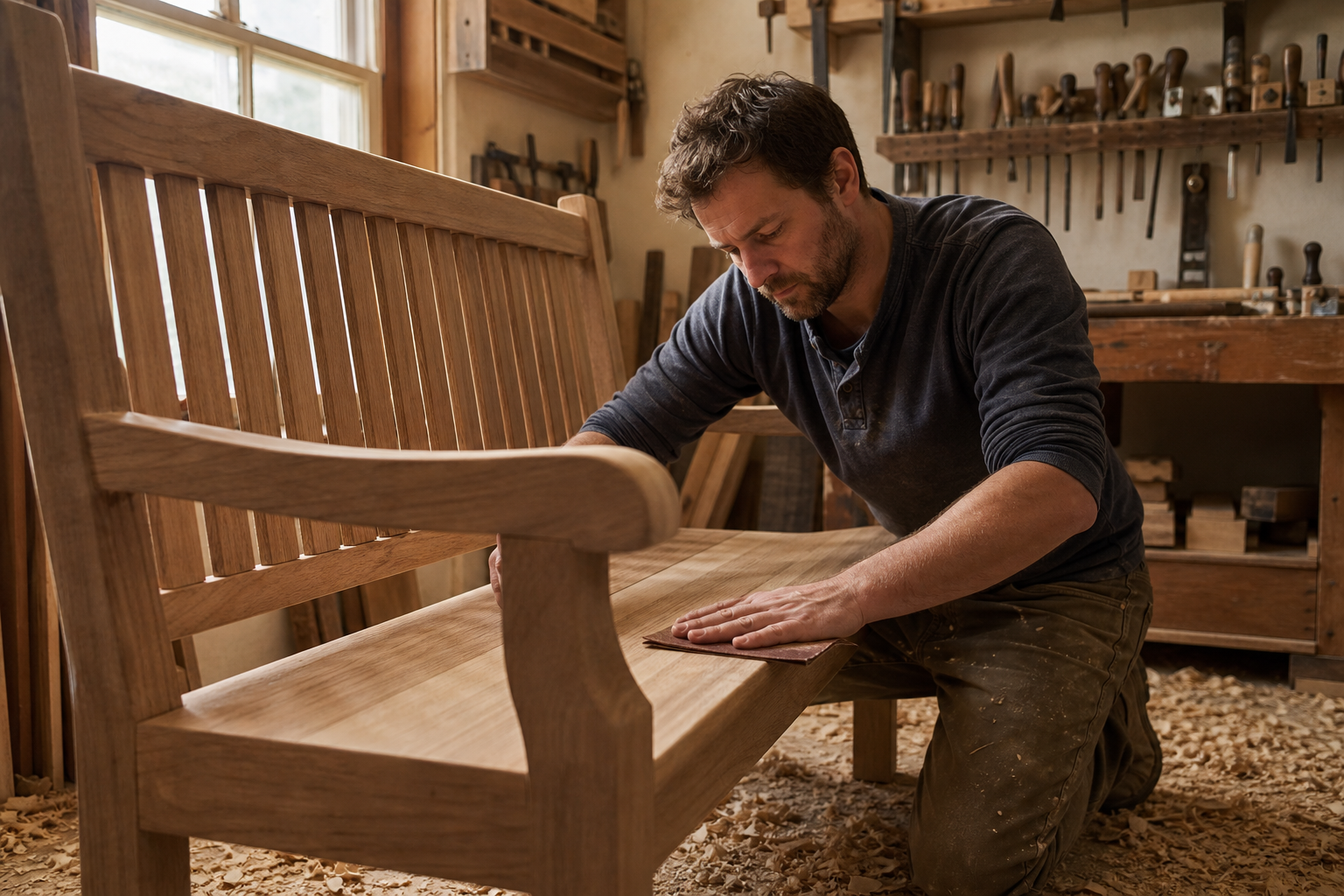
Hand-finishing is part of what gives every live edge dining bench its individual character.
Final Thoughts on Choosing a Live Edge Dining Bench
In the end, a live edge dining bench offers a practical and visually striking way to add seating, warmth, and natural character to a dining room. By measuring carefully, matching wood tones, and planning for freight delivery ahead of time, homeowners can choose a piece that fits both their table and their household's daily habits. Ultimately, whether paired with a reclaimed table or a more refined walnut design, a well-chosen live edge dining bench can remain a durable, character-rich centerpiece for many years to come.