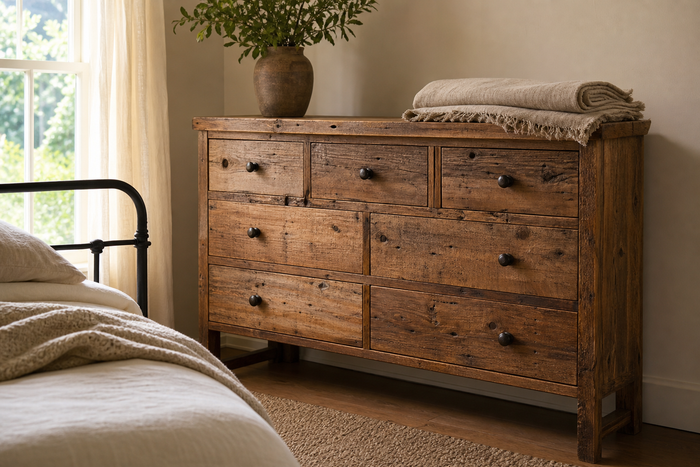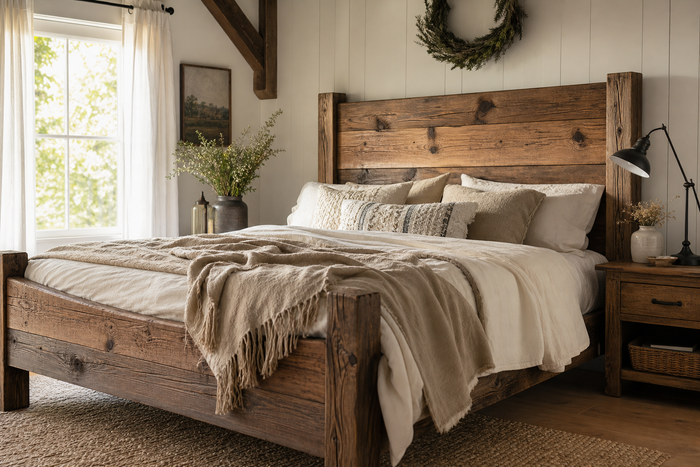
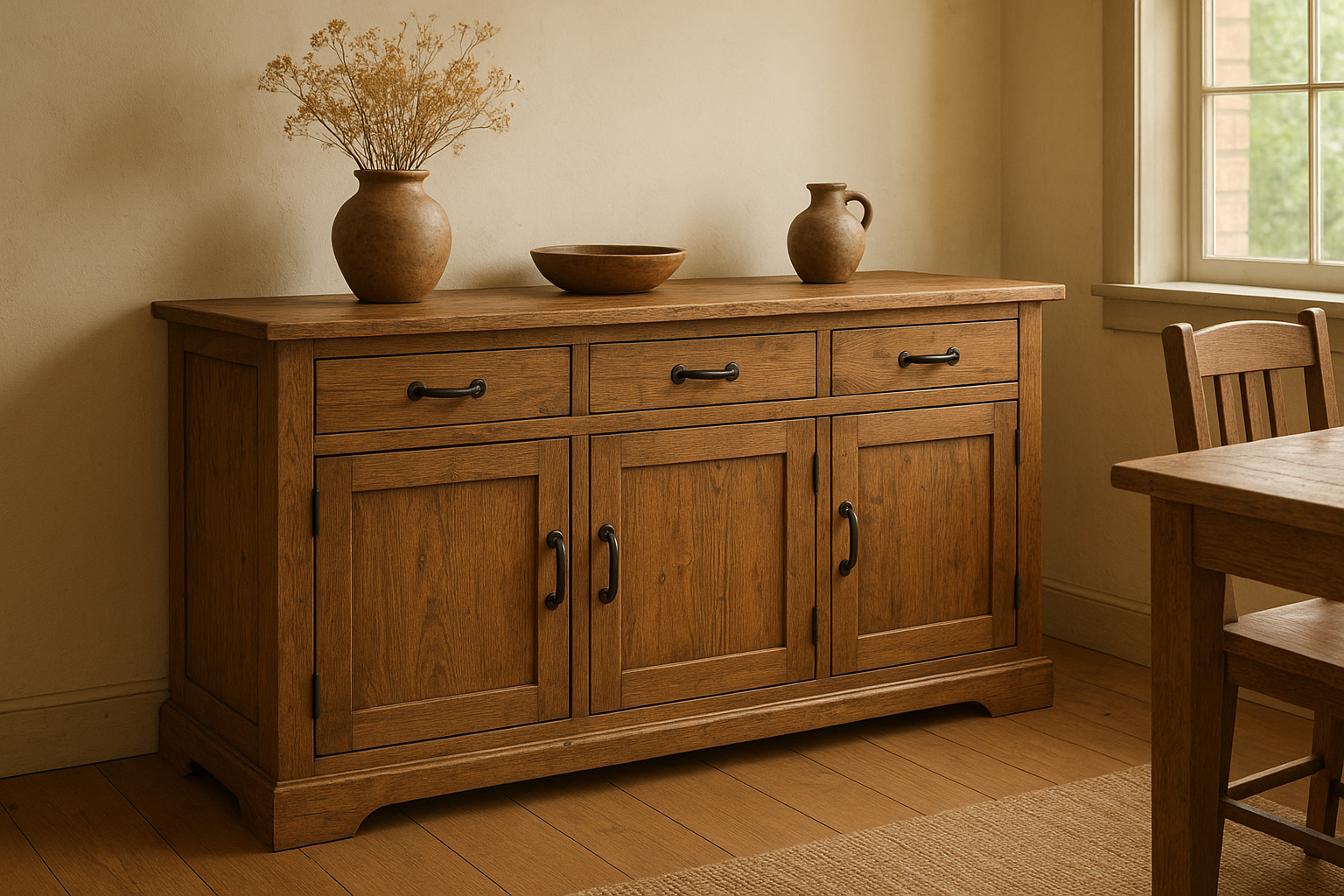
Rustic sideboards bring warmth, storage, and handcrafted character to dining rooms, living rooms, and entryways alike. Made from solid or reclaimed wood, these cabinets combine practical storage with the kind of natural grain and texture that mass-produced furniture simply cannot replicate. Whether you're furnishing a farmhouse kitchen or adding a statement piece to a transitional living room, understanding styles, sizing, and delivery expectations will help you choose a piece built to last for generations.
In short: a rustic sideboard is a low, wide storage cabinet crafted from solid or reclaimed wood, prized for visible knots, grain, and sturdy construction. This guide covers what to look for, how to size one correctly, and what to expect when ordering online.
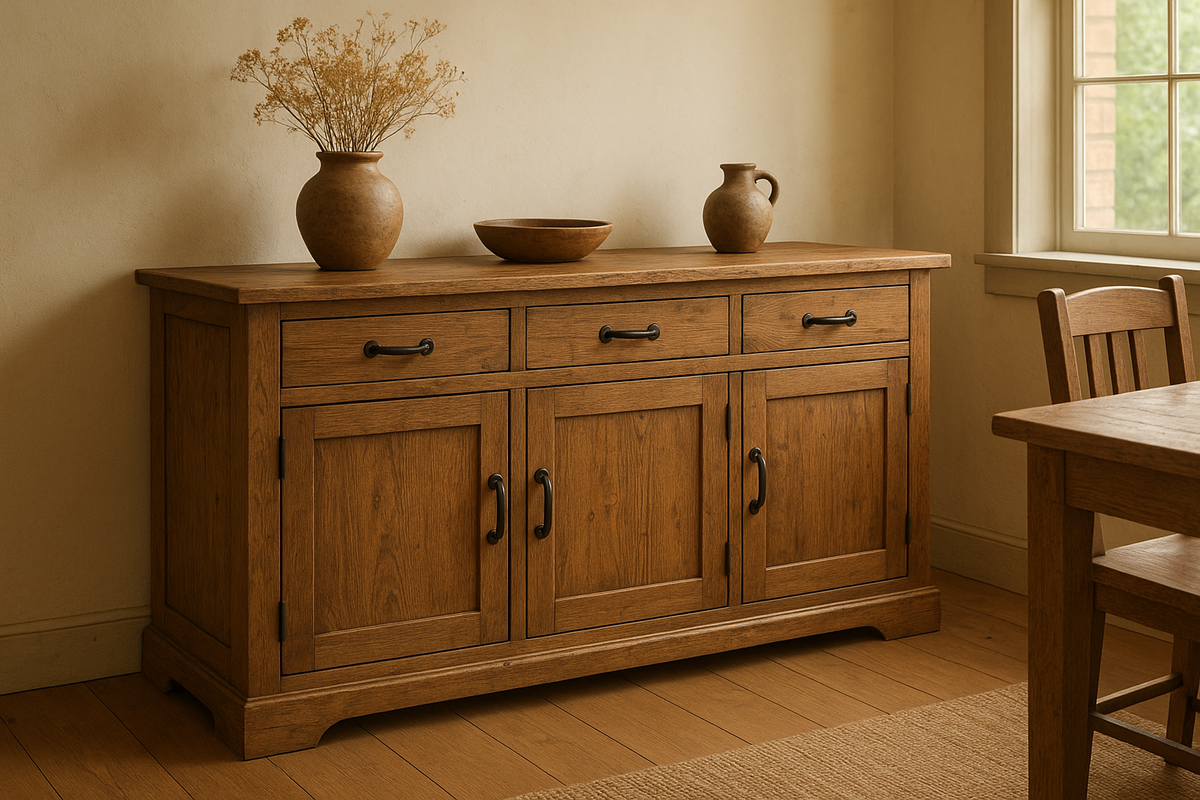
Rustic sideboards like this one add both storage and warmth to a farmhouse dining room.
What Are Rustic Sideboards?
Rustic sideboards are storage cabinets built from solid or reclaimed wood, typically featuring doors, drawers, or open shelving across a wide, low-profile frame. Unlike painted or veneered furniture, a true rustic piece shows natural knots, mineral streaks, and grain variation on purpose. As a result, no two sideboards look exactly alike, even within the same product line.
According to the furniture reference entry on sideboards, the piece originated as a dining-room serving surface before evolving into general-purpose storage furniture. Today, rustic versions borrow that same function while leaning into farmhouse, Southwestern, and reclaimed-wood aesthics rather than formal finishes.
Why Choose Solid Wood or Reclaimed Wood Sideboards
Solid and reclaimed wood sideboards hold up differently than particleboard furniture because the material itself is structural, not just a surface layer. Consequently, dents and scratches can often be sanded and refinished rather than becoming permanent damage. In addition, reclaimed lumber carries a documented history, since it is salvaged from older structures or retired materials rather than freshly harvested timber, as described in this overview of reclaimed lumber.
Beyond durability, many shoppers simply prefer the look. Natural grain patterns, visible knots, and slight color variation give rustic pieces a handmade quality that uniform, factory-finished furniture cannot match. For a closer look at these options, the handcrafted rustic wood sideboard collection showcases a range of finishes side by side.
Popular Styles of Rustic Buffets and Sideboards
Rustic buffets and sideboards come in several recognizable styles, each suited to a slightly different room aesthetic. Farmhouse styles tend to feature plank-front doors, iron hardware, and a lightly distressed finish. Southwestern designs often include carved detailing and warmer tones, while reclaimed-wood pieces emphasize raw texture and visible repair marks from their previous life as barn wood or old flooring.
For example, the Woodlands Buffet leans into a traditional farmhouse profile, while the Cabana rustic buffet cabinet offers a solid pine design with a slightly more carved, artisan feel. Comparing a few styles side by side makes it easier to identify which silhouette fits your room.
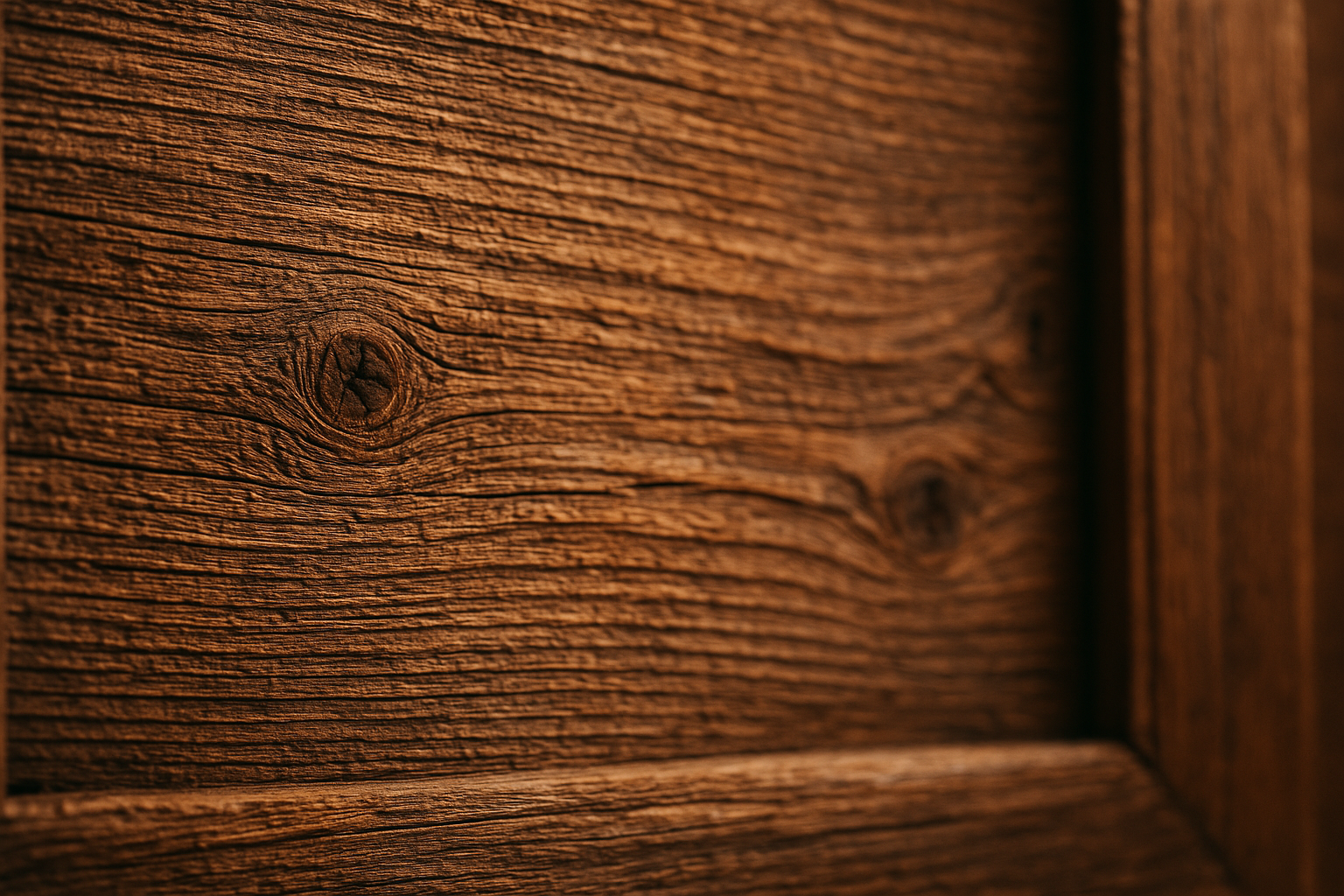
Natural knots and grain patterns like these are considered character, not flaws, on reclaimed wood pieces.
How to Choose the Right Rustic Sideboard for Your Space
Choosing the right rustic sideboard involves more than picking a style you like. Specifically, measurements, wood type, and storage needs all affect whether the piece will function well once it arrives. Follow these steps before ordering:
- Measure the full length of the wall where the sideboard will sit, then subtract at least 36 inches so chairs and foot traffic still have room to pass comfortably.
- Decide between pine, mango, teak, or reclaimed wood based on the color, weight, and grain character you want, since each species ages and wears differently over time.
- Decide how many doors, drawers, and shelves you actually need for dishware, linens, or media equipment before comparing specific sideboard models online.
- Check the upfront freight price, estimated production timeline, and curbside delivery process so there are no surprises when the piece ships to your home.
- Read the seller's quality guarantee and return promise carefully so you understand your options if the sideboard does not fit or match your space once it arrives.
If your dining room already includes a table and chairs, browsing the full rustic dining room furniture collection can help you coordinate wood tones and hardware finishes across every piece at once.
Rustic Sideboard Sizing and Placement Tips
Most dining rooms comfortably fit a sideboard between 48 and 72 inches wide, though entryway and living room spaces often call for narrower consoles instead. In particular, width matters more than depth for traffic flow, since a deep sideboard against a wall rarely interferes with movement the way a wide one can if it blocks a doorway swing.
Height is another consideration. Standard sideboards sit between 32 and 36 inches tall, which works well for serving food or displaying decor, but can feel low if you plan to mount a television above it. For media use, pairing a shorter sideboard with wall-mounted shelving above often looks more balanced than stacking a tall television directly on top.
Before finalizing a purchase, it also helps to confirm door swing clearance. Hinged doors need enough open space in front of the cabinet, while sliding or drawer-style fronts work better in tighter hallways or entryways. As a result, measuring both the wall length and the floor clearance in front of the piece prevents frustrating surprises after delivery.
Caring for Reclaimed Wood Sideboards
Reclaimed wood sideboards generally need less maintenance than people expect, but a few habits extend their lifespan significantly. Dust the surface regularly with a soft, dry cloth, and avoid ammonia-based or abrasive cleaners that can strip hand-applied finishes. Furthermore, using coasters or placemats under dishes and drinkware prevents moisture rings from forming on the wood over time.
Direct sunlight and nearby heating vents can also cause uneven fading or minor cracking in solid wood over several years. Therefore, positioning a sideboard away from direct afternoon sun, or using curtains to filter light, helps preserve the finish longer. Minor scratches can typically be buffed out with a wood-specific polish, which is one advantage solid wood holds over laminate furniture.
Freight Delivery and What to Expect When Buying Rustic Sideboards Online
Large, solid wood sideboards are too heavy and bulky for standard parcel carriers, so they typically ship via pallet freight. According to the U.S. Environmental Protection Agency's guidance on sustainable materials management, durable goods made from solid materials are generally designed for longer service life, which is part of why freight-shipped furniture tends to be built heavier than disposable alternatives.
Freight delivery is usually curbside only, meaning the carrier delivers the pallet to your driveway or curb rather than carrying it inside. Consequently, it helps to plan for extra hands or simple tools to move the piece into your home once it arrives. Made-to-order sideboards also typically require four to eight weeks for production and transit, so ordering early for a specific date matters.
Before checkout, reviewing upfront freight pricing avoids unexpected charges later. For a detailed look at one popular option, the reclaimed wood 4-door, 4-drawer sideboard lists its freight estimate directly on the product page, which is a good standard to look for from any seller. You can also browse the full catalog at cozycompletehomes.com to compare freight costs across different sizes.
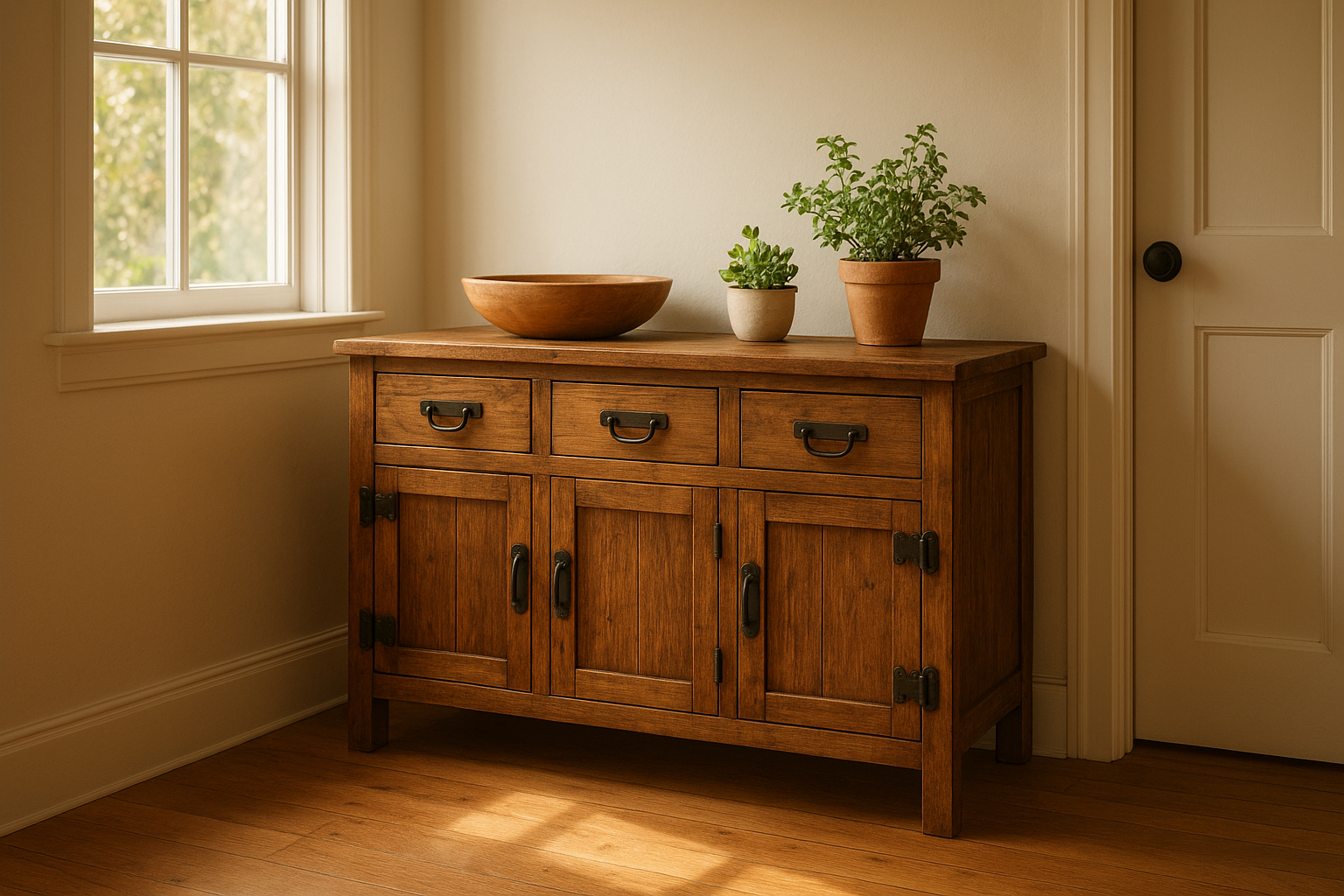
Beyond the dining room, rustic sideboards double well as entryway storage and display surfaces.
Frequently Asked Questions About Rustic Sideboards
What is a rustic sideboard?
A rustic sideboard is a low, wide storage cabinet, usually made from solid or reclaimed wood, featuring visible grain, knots, and sturdy hardware. It is typically used in dining rooms or living rooms to hold dishware, linens, or media equipment.
What is the difference between a sideboard and a buffet?
The terms are largely interchangeable today, though a buffet traditionally refers to a serving-height piece used for food presentation during meals. A sideboard historically leaned more toward storage, but modern retailers use both names for the same style of cabinet.
How much do rustic sideboards cost?
Solid wood rustic sideboards generally range from a few hundred dollars for simpler designs to well over a thousand dollars for larger, hand-carved, or artisan-made pieces. Price depends on wood species, size, hardware, and whether the piece is made to order.
What wood is best for a rustic sideboard?
Pine, mango, teak, and reclaimed wood are popular choices because they are durable and show natural grain variation. Each species has a different hardness, color, and weight, so the best option depends on your room's style and expected use.
How long does it take to receive a made-to-order rustic sideboard?
Made-to-order rustic sideboards typically take four to eight weeks for production and freight delivery, since each piece is built after the order is placed. Lead times vary by artisan supplier and current demand.
How are large rustic sideboards delivered?
Large solid wood sideboards are shipped via pallet freight and delivered curbside, since they are too heavy and bulky for standard parcel carriers. Inside or white-glove delivery is not included unless specifically stated by the seller.
Can rustic sideboards be used outside the dining room?
Yes, rustic sideboards work well in living rooms as media consoles, in entryways as storage and display surfaces, and even in bedrooms as extra dresser space. Their flat top and enclosed storage make them versatile across rooms.
How do you care for a reclaimed wood sideboard?
Dust reclaimed wood sideboards regularly with a soft cloth and avoid harsh chemical cleaners that can strip natural finishes. Use coasters or placemats to prevent moisture rings, and keep the piece away from direct heat sources or prolonged sun exposure.
What size sideboard fits a standard dining room?
Most dining rooms comfortably fit a sideboard between 48 and 72 inches wide, leaving enough wall space for chairs to move freely. Measure your wall length and subtract at least 36 inches of clearance before choosing a specific size.
Are natural knots and grain variations a defect?
No, knots, mineral streaks, and grain variation are natural characteristics of solid and reclaimed wood, not manufacturing flaws. Reputable sellers treat these marks as evidence of authentic, handcrafted construction rather than defects.
What is a common mistake people make when buying a sideboard online?
A common mistake is skipping exact measurements and freight details before checkout, which can lead to delivery surprises. Shoppers should also confirm whether the piece is made to order, since that affects the realistic delivery timeline.
Do rustic sideboards match modern furniture?
Yes, many homeowners pair rustic sideboards with modern or transitional decor to add warmth and texture against cleaner lines. Choosing simpler hardware and a lighter wood tone can help a rustic piece blend into a more contemporary room.
What should I check before buying a sideboard online?
Confirm the overall dimensions, wood species, estimated lead time, and freight delivery cost before completing checkout. It also helps to review the seller's quality guarantee and return policy in case the piece does not fit your space.
Does this retailer ship outside the contiguous United States?
No, shipping is limited to the contiguous United States, meaning Alaska, Hawaii, U.S. territories, and international addresses are not currently served. This keeps freight pricing and delivery timelines predictable for customers in the lower 48 states.
What is the return policy for rustic sideboards?
Reputable sellers back solid wood furniture with a quality guarantee and a clear return process in case a piece arrives damaged or does not meet expectations. Review the specific return window and condition requirements listed on the product page before purchase.
Final Thoughts on Choosing Rustic Sideboards
Rustic sideboards offer a practical way to add storage, texture, and handcrafted character to almost any room in the home. By measuring carefully, comparing wood species, and confirming freight delivery details upfront, you can avoid the most common pitfalls of buying substantial furniture online. In the end, a well-chosen rustic sideboard is not just storage; it is a piece designed to age gracefully and serve a home for decades. For a curated starting point, browsing options such as the reclaimed wood 4-door, 4-drawer sideboard or exploring the broader catalog at cozycompletehomes.com is a practical next step toward finding the right fit for your space.