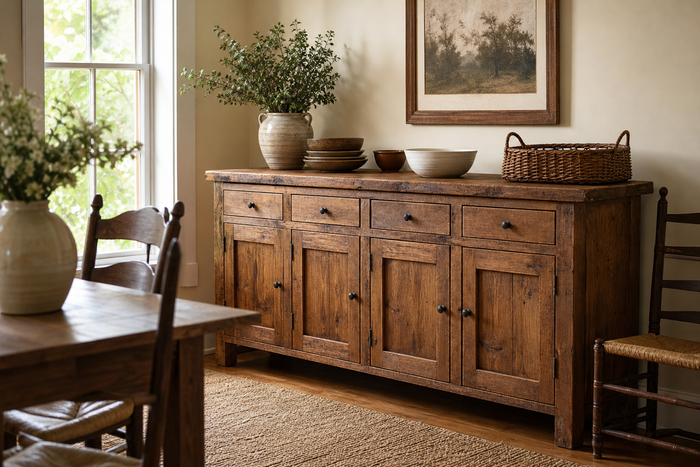
To care for an old wood coffee table, dust it weekly with a soft cloth, wipe spills right away, keep it away from heat and direct sun, and refresh the finish with a wood-safe wax or oil a couple of times a year. Old wood coffee table care is mostly gentle, steady habits rather than heavy products. Here is how to keep your table looking warm and full of character.
Key Takeaways
- Dust weekly with a dry, soft cloth, and clean with a barely damp one.
- Wipe spills at once and use coasters under every glass and mug.
- Keep the table away from vents, radiators, and strong sunlight.
- Wax or oil the wood once or twice a year, after testing a small spot.
- Natural knots, grain, and variation are unique character, not flaws.
What Does Caring for an Old Wood Coffee Table Involve?
Caring for an old wood coffee table means cleaning gently, protecting the surface from moisture and heat, and feeding the wood with a suitable wax or oil from time to time. Solid wood is sturdy, yet it still reacts to its surroundings.
For example, wood swells slightly in humid months and shrinks in dry ones. As a result, steady room conditions matter as much as polish. The Wikipedia overview of wood finishing explains why oils, waxes, and varnishes behave so differently.
Start by Identifying Your Table's Finish
Before you clean anything, find out what is on the wood. The finish decides which products are safe.
- Oiled or waxed: The surface looks soft and satin, and water may darken it slightly.
- Lacquer or varnish: The surface looks harder and a bit glossy, and water beads on top.
- Painted or distressed: Color sits on the surface and can lift with harsh cleaners.
- Raw or reclaimed: The wood looks matte and absorbs liquids quickly.
Always test any product on a hidden spot, such as the underside of the top. Wait a day before you judge the result.
How to Clean and Refresh Old Wood Furniture Step by Step
- Dust first. Wipe along the grain with a dry microfiber cloth to lift grit that could scratch.
- Clean lightly. Dampen a soft cloth with water and a drop of mild dish soap, wring it out well, and wipe a small section at a time.
- Dry right away. Follow with a clean, dry cloth so no moisture sits on the wood.
- Let it rest. Give the table about an hour of air time before adding any wax or oil.
- Apply a wood-safe wax or oil. Use a thin coat on a soft cloth, working with the grain, and follow the product directions.
- Buff. Remove the excess and buff gently until the surface feels smooth, not sticky.
Everyday Habits That Protect the Wood
Use coasters and trivets
Cold glasses leave rings, and hot mugs can mark the finish. Therefore, keep coasters within easy reach.
Manage light, heat, and humidity
Strong sun can fade wood unevenly, and heating vents can dry it out. If you can, move the table a few feet away, or rotate objects now and then so the surface ages evenly. The USDA Forest Products Laboratory publishes research on how moisture affects wood.
Lift, don't drag
Decor and trays can scratch the top when slid across it. Felt pads on the bottoms help, and they cost very little.
Fixing Common Problems on an Aged Coffee Table
| Problem | Gentle first step |
|---|---|
| White water ring | Let it dry, then rub lightly with a little wax along the grain. |
| Dull, dry look | Clean, then apply a thin coat of wood-safe oil or wax. |
| Light surface scratch | Buff with a soft cloth and a touch of matching wax. |
| Sticky film | Wipe with a barely damp cloth and mild soap, then dry fully. |
| Deep gouge or loose joint | Consult a furniture restorer before trying a repair. |
Old wood doesn't need to look new. It needs to look loved.
Embrace Natural Knots, Grain, and Variation
Part of an old table's charm is its natural knots, grain, and variation. Those marks are unique character, so you don't need to hide them. Instead, a little wax can bring out the depth of the grain.
At cozycompletehomes.com, the shop is run by a retired elementary teacher and principal. It offers hand-curated rustic and reclaimed solid wood furniture. You can read the reclaimed wood coffee table buying guide or the credenza care guide, since the same habits apply. If you want another solid wood centerpiece, browse the seesham wood coffee table or the mesquite coffee table with turquoise. Freight pricing appears before checkout, and large pieces arrive by curbside pallet freight within the contiguous United States. Our rustic console table guide helps when you're styling the rest of the room.
Frequently Asked Questions
How do I care for an old wood coffee table day to day?
Dust with a soft, dry cloth, use coasters, and wipe spills right away. These small habits prevent most damage.
How often should I clean it?
Dust weekly, and wipe with a barely damp cloth as needed. Deep cleaning is rarely necessary.
What is the best cleaner for old wood?
Mild dish soap in water on a well-wrung cloth is usually enough. Avoid ammonia, bleach, and heavy sprays.
Should I use oil or wax?
It depends on the existing finish. Oil soaks into raw or oiled wood, while wax sits on top and adds a soft sheen.
How often should I wax or oil it?
Once or twice a year suits most tables. Dry-looking wood may want a touch more.
Is furniture polish spray a good idea?
Use it sparingly. Some sprays leave a buildup that dulls the surface over time.
How do I remove water rings?
Let the area dry, then buff gently with a small amount of wax along the grain. Stubborn rings may need a restorer.
Can sunlight damage an old wood coffee table?
Yes, strong sun can fade or darken wood unevenly. Curtains or a different spot in the room help.
Are scratches and knots flaws?
Natural knots and grain are part of the wood's unique character. Light wear adds to the story of a well-used table.
What are the most common care mistakes?
Soaking the wood, using harsh chemicals, and skipping the spot test are the big three. Applying too much oil or wax is another.
In short, the best way to care for an old wood coffee table is simple: dust often, clean gently, protect it from moisture, heat, and sun, and refresh the finish once or twice a year. Test every product first, and let the natural knots, grain, and variation shine. With steady care, your table can keep its warm look for many years.